网站语言编程,装饰公司营销网站建设,电脑商城网站模板,一个不懂技术的人如何做网站文章目录 图谱问答NERac自动机实体链接实体消歧 多跳问答neo4j_graph执行流程结构图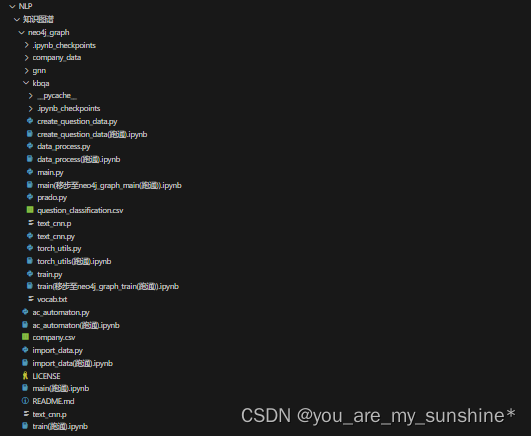company_datacompany_data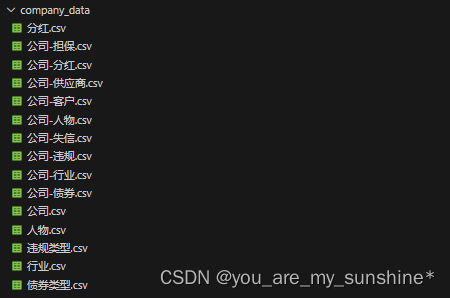 代码与数据先启动neo4j图数据库import_datacreate_question_datadata_processac_automatontorch_utilstext_cnntrainmain 图谱问答实战小结 图谱问答
图谱问答有很多种情况例如根据实体和关系查询尾实体或者根据实体查询关系甚至还会出现多跳的情况不同的情况采用的方法略有不同我们先来看最简单的情况根据头实体和关系查询尾实体。
1、找到实体与关系可以采用BIO的形式做NER也可以直接使用分类的方法 2、实体链接如果遇到相同名字的实体需要做一个消歧
NER
目前的NER的方式很多基本的结构都是encodercrf层
ac自动机
1、构建前缀树 2、给前缀树加上fail指针 节点i的fail指针如果在第一层则指向root节点其它情况指向其父节点的fail指针指向的节点的相同节点
有如下的几个模式串she he say shr her 匹配串yasherhs
实体链接
实体链接包括两个步骤 Candidate Entity Generation、Entity Disambiguation
找到候选实体后下一步就是实体消歧
实体消歧
实体消歧这里我们使用的是匹配的方法 1、使用孪生网络计算相似度 2、对问题和候选集做embedding计算余弦相似度
多跳问答 neo4j_graph执行流程
1、先执行import_data.py脚本把company_data下面的数据导入到neo4j
2、执行gnn/saint.py脚本进行节点分类
3、company.csv文件是每个节点的属性
结构图
company_data
截图举几个例子ps数据为虚假作为学习使用
代码与数据
先启动neo4j图数据库
操作流程WINRcmdneo4j.bat concole
import_data
import os
from py2neo import Node, Subgraph, Graph, Relationship, NodeMatcher
from tqdm import tqdm
import pandas as pd
import numpy as np#graph Graph(http://127.0.0.1:7474, auth(neo4j, qwer))#graph Graph(http://127.0.0.1:7474, auth(neo4j, qwer))#uri bolt://localhost:7687
#graph Graph(uri, auth(neo4j, password), port 7687, secureTrue)#uri uri http://localhost:7687
#graph Graph(uri, auth(neo4j, qwer), port 7687, secureTrue, name StellarGraph)import py2neo
default_host os.environ.get(STELLARGRAPH_NEO4J_HOST)# Create the Neo4j Graph database object; the arguments can be edited to specify location and authenticationgraph py2neo.Graph(hostdefault_host, port7687, userneo4j, passwordqwer)def import_company():df pd.read_csv(company_data/公司.csv)eid df[eid].valuesname df[companyname].valuesnodes []data list(zip(eid, name))for eid, name in tqdm(data):profit np.random.randint(100000, 100000000, 1)[0]node Node(company, namename, profitint(profit), eideid)nodes.append(node)graph.create(Subgraph(nodes))def import_person():df pd.read_csv(company_data/人物.csv)pid df[personcode].valuesname df[personname].valuesnodes []data list(zip(pid, name))for eid, name in tqdm(data):age np.random.randint(20, 70, 1)[0]node Node(person, namename, ageint(age), pidstr(eid))nodes.append(node)graph.create(Subgraph(nodes))def import_industry():df pd.read_csv(company_data/行业.csv)names df[orgtype].valuesnodes []for name in tqdm(names):node Node(industry, namename)nodes.append(node)graph.create(Subgraph(nodes))def import_assign():df pd.read_csv(company_data/分红.csv)names df[schemetype].valuesnodes []for name in tqdm(names):node Node(assign, namename)nodes.append(node)graph.create(Subgraph(nodes))def import_violations():df pd.read_csv(company_data/违规类型.csv)names df[gooltype].valuesnodes []for name in tqdm(names):node Node(violations, namename)nodes.append(node)graph.create(Subgraph(nodes))def import_bond():df pd.read_csv(company_data/债券类型.csv)names df[securitytype].valuesnodes []for name in tqdm(names):node Node(bond, namename)nodes.append(node)graph.create(Subgraph(nodes))# def import_dishonesty():
# node Node(dishonesty, name失信)
# graph.create(node)def import_relation():df pd.read_csv(company_data/公司-人物.csv)matcher NodeMatcher(graph)eid df[eid].valuespid df[pid].valuespost df[post].valuesrelations []data list(zip(eid, pid, post))for e, p, po in tqdm(data):company matcher.match(company, eide).first()person matcher.match(person, pidstr(p)).first()if company is not None and person is not None:relations.append(Relationship(company, po, person))graph.create(Subgraph(relationshipsrelations))print(import company-person relation succeeded)df pd.read_csv(company_data/公司-行业.csv)matcher NodeMatcher(graph)eid df[eid].valuesname df[industry].valuesrelations []data list(zip(eid, name))for e, n in tqdm(data):company matcher.match(company, eide).first()industry matcher.match(industry, namestr(n)).first()if company is not None and industry is not None:relations.append(Relationship(company, 行业类型, industry))graph.create(Subgraph(relationshipsrelations))print(import company-industry relation succeeded)df pd.read_csv(company_data/公司-分红.csv)matcher NodeMatcher(graph)eid df[eid].valuesname df[assign].valuesrelations []data list(zip(eid, name))for e, n in tqdm(data):company matcher.match(company, eide).first()assign matcher.match(assign, namestr(n)).first()if company is not None and assign is not None:relations.append(Relationship(company, 分红方式, assign))graph.create(Subgraph(relationshipsrelations))print(import company-assign relation succeeded)df pd.read_csv(company_data/公司-违规.csv)matcher NodeMatcher(graph)eid df[eid].valuesname df[violations].valuesrelations []data list(zip(eid, name))for e, n in tqdm(data):company matcher.match(company, eide).first()violations matcher.match(violations, namestr(n)).first()if company is not None and violations is not None:relations.append(Relationship(company, 违规类型, violations))graph.create(Subgraph(relationshipsrelations))print(import company-violations relation succeeded)df pd.read_csv(company_data/公司-债券.csv)matcher NodeMatcher(graph)eid df[eid].valuesname df[bond].valuesrelations []data list(zip(eid, name))for e, n in tqdm(data):company matcher.match(company, eide).first()bond matcher.match(bond, namestr(n)).first()if company is not None and bond is not None:relations.append(Relationship(company, 债券类型, bond))graph.create(Subgraph(relationshipsrelations))print(import company-bond relation succeeded)# df pd.read_csv(company_data/公司-失信.csv)# matcher NodeMatcher(graph)# eid df[eid].values# rel df[dishonesty].values# relations []# data list(zip(eid, rel))# for e, r in tqdm(data):# company matcher.match(company, eide).first()# dishonesty matcher.match(dishonesty, name失信).first()# if company is not None and dishonesty is not None:# if pd.notna(r):# if int(r) 0:# relations.append(Relationship(company, 无, dishonesty))# elif int(r) 1:# relations.append(Relationship(company, 有, dishonesty))## graph.create(Subgraph(relationshipsrelations))# print(import company-dishonesty relation succeeded)def import_company_relation():df pd.read_csv(company_data/公司-供应商.csv)matcher NodeMatcher(graph)eid1 df[eid1].valueseid2 df[eid2].valuesrelations []data list(zip(eid1, eid2))for e1, e2 in tqdm(data):if pd.notna(e1) and pd.notna(e2) and e1 ! e2:company1 matcher.match(company, eide1).first()company2 matcher.match(company, eide2).first()if company1 is not None and company2 is not None:relations.append(Relationship(company1, 供应商, company2))graph.create(Subgraph(relationshipsrelations))print(import company-supplier relation succeeded)df pd.read_csv(company_data/公司-担保.csv)matcher NodeMatcher(graph)eid1 df[eid1].valueseid2 df[eid2].valuesrelations []data list(zip(eid1, eid2))for e1, e2 in tqdm(data):if pd.notna(e1) and pd.notna(e2) and e1 ! e2:company1 matcher.match(company, eide1).first()company2 matcher.match(company, eide2).first()if company1 is not None and company2 is not None:relations.append(Relationship(company1, 担保, company2))graph.create(Subgraph(relationshipsrelations))print(import company-guarantee relation succeeded)df pd.read_csv(company_data/公司-客户.csv)matcher NodeMatcher(graph)eid1 df[eid1].valueseid2 df[eid2].valuesrelations []data list(zip(eid1, eid2))for e1, e2 in tqdm(data):if pd.notna(e1) and pd.notna(e2):company1 matcher.match(company, eide1).first()company2 matcher.match(company, eide2).first()if company1 is not None and company2 is not None:relations.append(Relationship(company1, 客户, company2))graph.create(Subgraph(relationshipsrelations))print(import company-customer relation succeeded)def delete_relation():cypher match ()-[r]-() delete rgraph.run(cypher)def delete_node():cypher match (n) delete ngraph.run(cypher)def import_data():import_company()import_company_relation()import_person()import_industry()import_assign()import_violations()import_bond()# import_dishonesty()import_relation()def delete_data():delete_relation()delete_node()print(delete data succeeded)if __name__ __main__:profit np.random.randint(100000, 100000000, 10).tolist()delete_data()import_data()create_question_data
from py2neo import Graph
import numpy as np
import pandas as pdgraph Graph(http://localhost:7474, auth(neo4j, qwer))# import os
# import py2neo
# default_host os.environ.get(STELLARGRAPH_NEO4J_HOST)
# graph py2neo.Graph(hostdefault_host, port7687, userneo4j, passwordqwer)def create_attribute_question():company graph.run(MATCH (n:company) RETURN n.name as name).to_ndarray()person graph.run(MATCH (n:person) RETURN n.name as name).to_ndarray()questions []for c in company:c c[0].strip()question f{c}的收益questions.append(question)question f{c}的收入questions.append(question)for p in person:p p[0].strip()question f{p}的年龄是几岁questions.append(question)question f{p}多大questions.append(question)question f{p}几岁questions.append(question)return questionsdef create_entity_question():questions []for _ in range(250):for op in [大于, 等于, 小于, 是, 有]:profit np.random.randint(10000, 10000000, 1)[0]question f收益{op}{profit}的公司有哪些questions.append(question)profit np.random.randint(10000, 10000000, 1)[0]question f哪些公司收益{op}{profit}questions.append(question)for _ in range(250):for op in [大于, 等于, 小于, 是, 有]:profit np.random.randint(20, 60, 1)[0]question f年龄{op}{profit}的人有哪些questions.append(question)profit np.random.randint(20, 60, 1)[0]question f哪些人年龄{op}{profit}questions.append(question)return questionsdef create_relation_question():relation graph.run(MATCH (n)-[r]-(m) RETURN n.name as name, type(r) as r).to_ndarray()questions []for r in relation:if str(r[1]) in [董事, 监事]:question f{r[0]}的{r[1]}是谁questions.append(question)else:question f{r[0]}的{r[1]}questions.append(question)question f{r[0]}的{r[1]}是啥questions.append(question)question f{r[0]}的{r[1]}什么questions.append(question)return questionsq1 create_entity_question()
q2 create_attribute_question()
q3 create_relation_question()df pd.DataFrame()
df[question] q1 q2 q3
df[label] [0] * len(q1) [1] * len(q2) [2] * len(q3)df.to_csv(question_classification.csv, encodingutf_8_sig, indexFalse)data_process
import pandas as pd
import jieba
from collections import defaultdict
import numpy as np
import os__file__ kbqa
path os.path.dirname(__file__)def tokenize(text, use_jiebaTrue):if use_jieba:res list(jieba.cut(text, cut_allFalse))else:res list(text)return res# 构建词典
def build_vocab(del_word_frequency0):data pd.read_csv(question_classification.csv)segment data[question].apply(tokenize)word_frequency defaultdict(int)for row in segment:for i in row:word_frequency[i] 1word_sort sorted(word_frequency.items(), keylambda x: x[1], reverseTrue) # 根据词频降序排序f open(vocab.txt, w, encodingutf-8)f.write([PAD] \n [UNK] \n)for d in word_sort:if d[1] del_word_frequency:f.write(d[0] \n)f.close()# 划分训练集和测试集
def split_data(df, split0.7):df df.sample(frac1)length len(df)train_data df[0:length - 2000]eval_data df[length - 2000:]return train_data, eval_datavocab {}
if os.path.exists(path /vocab.txt):with open(path /vocab.txt, encodingutf-8)as file:for line in file.readlines():vocab[line.strip()] len(vocab)# 把数据转换成index
def seq2index(seq):seg tokenize(seq)seg_index []for s in seg:seg_index.append(vocab.get(s, 1))return seg_index# 统一长度
def padding_seq(X, max_len10):return np.array([np.concatenate([x, [0] * (max_len - len(x))]) if len(x) max_len else x[:max_len] for x in X])if __name__ __main__:build_vocab(5)ac_automaton
import ahocorasick
from py2neo import Graphgraph Graph(http://localhost:7474, auth(neo4j, qwer))
company graph.run(MATCH (n:company) RETURN n.name as name).to_ndarray()
relation graph.run(MATCH ()-[r]-() RETURN distinct type(r)).to_ndarray()ac_company ahocorasick.Automaton()
ac_relation ahocorasick.Automaton()for key in enumerate(company):ac_company.add_word(key[1][0], key[1][0])
for key in enumerate(relation):ac_relation.add_word(key[1][0], key[1][0])ac_company.make_automaton()
ac_relation.make_automaton()# haystack 浙江东阳东欣房地产开发有限公司的客户的供应商
haystack 衡水中南锦衡房地产有限公司的债券类型
# haystack 临沂金丰公社农业服务有限公司的分红方式
print(question:, haystack)subject
predicate []for end_index, original_value in ac_company.iter(haystack):start_index end_index - len(original_value) 1print(公司实体, (start_index, end_index, original_value))assert haystack[start_index:start_index len(original_value)] original_valuesubject original_valuefor end_index, original_value in ac_relation.iter(haystack):start_index end_index - len(original_value) 1print(关系, (start_index, end_index, original_value))assert haystack[start_index:start_index len(original_value)] original_valuepredicate.append(original_value)for p in predicate:cypher fmatch (s:company)-[p:{p}]-(o) where s.name{subject} return o.nameprint(cypher)res graph.run(cypher).to_ndarray()# print(res)subject res[0][0]
print(answer:, res[0][0])torch_utils
import torch
import time
import numpy as np
import sixclass TrainHandler:def __init__(self,train_loader,valid_loader,model,criterion,optimizer,model_path,batch_size32,epochs5,schedulerNone,gpu_num0):self.train_loader train_loaderself.valid_loader valid_loaderself.criterion criterionself.optimizer optimizerself.model_path model_pathself.batch_size batch_sizeself.epochs epochsself.scheduler schedulerif torch.cuda.is_available():self.device torch.device(fcuda:{gpu_num})print(Training device is gpu:{gpu_num})else:self.device torch.device(cpu)print(Training device is cpu)self.model model.to(self.device)def _train_func(self):train_loss 0train_correct 0for i, (x, y) in enumerate(self.train_loader):self.optimizer.zero_grad()x, y x.to(self.device).long(), y.to(self.device)output self.model(x)loss self.criterion(output, y)train_loss loss.item()loss.backward()self.optimizer.step()train_correct (output.argmax(1) y).sum().item()if self.scheduler is not None:self.scheduler.step()return train_loss / len(self.train_loader), train_correct / len(self.train_loader.dataset)def _test_func(self):valid_loss 0valid_correct 0for x, y in self.valid_loader:x, y x.to(self.device).long(), y.to(self.device)with torch.no_grad():output self.model(x)loss self.criterion(output, y)valid_loss loss.item()valid_correct (output.argmax(1) y).sum().item()return valid_loss / len(self.valid_loader), valid_correct / len(self.valid_loader.dataset)def train(self):min_valid_loss float(inf)for epoch in range(self.epochs):start_time time.time()train_loss, train_acc self._train_func()valid_loss, valid_acc self._test_func()if min_valid_loss valid_loss:min_valid_loss valid_losstorch.save(self.model, self.model_path)print(f\tSave model done valid loss: {valid_loss:.4f})secs int(time.time() - start_time)mins secs / 60secs secs % 60print(Epoch: %d % (epoch 1), | time in %d minutes, %d seconds % (mins, secs))print(f\tLoss: {train_loss:.4f}(train)\t|\tAcc: {train_acc * 100:.1f}%(train))print(f\tLoss: {valid_loss:.4f}(valid)\t|\tAcc: {valid_acc * 100:.1f}%(valid))def torch_text_process():from torchtext import datadef tokenizer(text):import jiebareturn list(jieba.cut(text))TEXT data.Field(sequentialTrue, tokenizetokenizer, lowerTrue, fix_length20)LABEL data.Field(sequentialFalse, use_vocabFalse)all_dataset data.TabularDataset.splits(path,trainLCQMC.csv,formatcsv,fields[(sentence1, TEXT), (sentence2, TEXT), (label, LABEL)])[0]TEXT.build_vocab(all_dataset)train, valid all_dataset.split(0.1)(train_iter, valid_iter) data.BucketIterator.splits(datasets(train, valid),batch_sizes(64, 128),sort_keylambda x: len(x.sentence1))return train_iter, valid_iterdef pad_sequences(sequences, maxlenNone, dtypeint32,paddingpost, truncatingpre, value0.):Pads sequences to the same length.This function transforms a list ofnum_samples sequences (lists of integers)into a 2D Numpy array of shape (num_samples, num_timesteps).num_timesteps is either the maxlen argument if provided,or the length of the longest sequence otherwise.Sequences that are shorter than num_timestepsare padded with value at the end.Sequences longer than num_timesteps are truncatedso that they fit the desired length.The position where padding or truncation happens is determined bythe arguments padding and truncating, respectively.Pre-padding is the default.# Argumentssequences: List of lists, where each element is a sequence.maxlen: Int, maximum length of all sequences.dtype: Type of the output sequences.To pad sequences with variable length strings, you can use object.padding: String, pre or post:pad either before or after each sequence.truncating: String, pre or post:remove values from sequences larger thanmaxlen, either at the beginning or at the end of the sequences.value: Float or String, padding value.# Returnsx: Numpy array with shape (len(sequences), maxlen)# RaisesValueError: In case of invalid values for truncating or padding,or in case of invalid shape for a sequences entry.if not hasattr(sequences, __len__):raise ValueError(sequences must be iterable.)num_samples len(sequences)lengths []for x in sequences:try:lengths.append(len(x))except TypeError:raise ValueError(sequences must be a list of iterables. Found non-iterable: str(x))if maxlen is None:maxlen np.max(lengths)# take the sample shape from the first non empty sequence# checking for consistency in the main loop below.sample_shape tuple()for s in sequences:if len(s) 0:sample_shape np.asarray(s).shape[1:]breakis_dtype_str np.issubdtype(dtype, np.str_) or np.issubdtype(dtype, np.unicode_)if isinstance(value, six.string_types) and dtype ! object and not is_dtype_str:raise ValueError(dtype {} is not compatible with values type: {}\nYou should set dtypeobject for variable length strings..format(dtype, type(value)))x np.full((num_samples, maxlen) sample_shape, value, dtypedtype)for idx, s in enumerate(sequences):if not len(s):continue # empty list/array was foundif truncating pre:trunc s[-maxlen:]elif truncating post:trunc s[:maxlen]else:raise ValueError(Truncating type %s not understood % truncating)# check trunc has expected shapetrunc np.asarray(trunc, dtypedtype)if trunc.shape[1:] ! sample_shape:raise ValueError(Shape of sample %s of sequence at position %s is different from expected shape %s %(trunc.shape[1:], idx, sample_shape))if padding post:x[idx, :len(trunc)] truncelif padding pre:x[idx, -len(trunc):] truncelse:raise ValueError(Padding type %s not understood % padding)return xif __name__ __main__:torch_text_process()
text_cnn
import torch
from torch import nnclass TextCNN(nn.Module):def __init__(self, vocab_len, embedding_size, n_class):super().__init__()self.embedding nn.Embedding(vocab_len, embedding_size)self.cnn1 nn.Conv2d(in_channels1, out_channels100, kernel_size[3, embedding_size])self.cnn2 nn.Conv2d(in_channels1, out_channels100, kernel_size[4, embedding_size])self.cnn3 nn.Conv2d(in_channels1, out_channels100, kernel_size[5, embedding_size])self.max_pool1 nn.MaxPool1d(kernel_size8)self.max_pool2 nn.MaxPool1d(kernel_size7)self.max_pool3 nn.MaxPool1d(kernel_size6)self.drop_out nn.Dropout(0.2)self.full_connect nn.Linear(300, n_class)def forward(self, x):embedding self.embedding(x)embedding embedding.unsqueeze(1)cnn1_out self.cnn1(embedding).squeeze(-1)cnn2_out self.cnn2(embedding).squeeze(-1)cnn3_out self.cnn3(embedding).squeeze(-1)out1 self.max_pool1(cnn1_out)out2 self.max_pool2(cnn2_out)out3 self.max_pool3(cnn3_out)out torch.cat([out1, out2, out3], dim1).squeeze(-1)out self.drop_out(out)out self.full_connect(out)# out torch.softmax(out, dim-1).squeeze(dim-1)return out
train
import torch
from torch.utils.data import TensorDataset, DataLoader
from kbqa.torch_utils import TrainHandler
from kbqa.data_process import *
from kbqa.text_cnn import TextCNN# df pd.read_csv(question_classification.csv)
# print(df[label].value_counts())def load_data(batch_size32):df pd.read_csv(kbqa/question_classification.csv)train_df, eval_df split_data(df)train_x df[question]train_y df[label]valid_x eval_df[question]valid_y eval_df[label]train_x padding_seq(train_x.apply(seq2index))train_y np.array(train_y)valid_x padding_seq(valid_x.apply(seq2index))valid_y np.array(valid_y)train_data_set TensorDataset(torch.from_numpy(train_x),torch.from_numpy(train_y))valid_data_set TensorDataset(torch.from_numpy(valid_x),torch.from_numpy(valid_y))train_data_loader DataLoader(datasettrain_data_set, batch_sizebatch_size, shuffleTrue)valid_data_loader DataLoader(datasetvalid_data_set, batch_sizebatch_size, shuffleTrue)return train_data_loader, valid_data_loadertrain_loader, valid_loader load_data(batch_size64)model TextCNN(1289, 256, 3)# 原model TextCNN(1141, 256, 3)1289根据vocat.txt行数
criterion torch.nn.CrossEntropyLoss()
optimizer torch.optim.SGD(model.parameters(), lr0.01)
scheduler torch.optim.lr_scheduler.StepLR(optimizer, 1, gamma0.9)
model_path text_cnn.p
handler TrainHandler(train_loader,valid_loader,model,criterion,optimizer,model_path,batch_size32,epochs5,schedulerNone,gpu_num0)
handler.train() main
import torch
from kbqa.data_process import *
import ahocorasick
from py2neo import Graph
import re
import tracebackmodel torch.load(kbqa/text_cnn.p, map_locationtorch.device(cpu))
model.eval()graph Graph(http://localhost:7474, auth(neo4j, qwer))
company graph.run(MATCH (n:company) RETURN n.name as name).to_ndarray()
person graph.run(MATCH (n:person) RETURN n.name as name).to_ndarray()
relation graph.run(MATCH ()-[r]-() RETURN distinct type(r)).to_ndarray()ac_company ahocorasick.Automaton()
ac_person ahocorasick.Automaton()
ac_relation ahocorasick.Automaton()for key in enumerate(company):ac_company.add_word(key[1][0], key[1][0])
for key in enumerate(person):ac_person.add_word(key[1][0], key[1][0])
for key in enumerate(relation):ac_relation.add_word(key[1][0], key[1][0])
ac_relation.add_word(年龄, 年龄)
ac_relation.add_word(年纪, 年纪)
ac_relation.add_word(收入, 收入)
ac_relation.add_word(收益, 收益)ac_company.make_automaton()
ac_person.make_automaton()
ac_relation.make_automaton()def classification_predict(s):s seq2index(s)s torch.from_numpy(padding_seq([s])).long() #.cuda().long()out model(s)out out.cpu().data.numpy()print(out)return out.argmax(1)[0]def entity_link(text):subject []subject_type Nonefor end_index, original_value in ac_company.iter(text):start_index end_index - len(original_value) 1print(实体, (start_index, end_index, original_value))assert text[start_index:start_index len(original_value)] original_valuesubject.append(original_value)subject_type companyfor end_index, original_value in ac_person.iter(text):start_index end_index - len(original_value) 1print(实体, (start_index, end_index, original_value))assert text[start_index:start_index len(original_value)] original_valuesubject.append(original_value)subject_type personreturn subject[0], subject_typedef get_op(text):pattern re.compile(r\d)num pattern.findall(text)op Noneif 大于 in text:op elif 小于 in text:op elif 等于 in text or 是 in text:op return op, float(num[0])def kbqa(text):print(* * 100)cls classification_predict(text)print(question type:, cls)res if cls 0:op, num get_op(text)subject_type attribute for w in [年龄, 年纪]:if w in text:subject_type personattribute agebreakfor w in [收入, 收益]:if w in text:subject_type companyattribute profitbreakcypher fmatch (n:{subject_type}) where n.{attribute}{op}{num} return n.nameprint(cypher)res graph.run(cypher).to_ndarray()elif cls 1:# 查询属性subject, subject_type entity_link(text)predicate for w in [年龄, 年纪]:if w in text and subject_type person:predicate agebreakfor w in [收入, 收益]:if w in text and subject_type company:predicate profitbreakcypher fmatch (n:{subject_type}) where n.name{subject} return n.{predicate}print(cypher)res graph.run(cypher).to_ndarray()elif cls 2:subject for end_index, original_value in ac_company.iter(text):start_index end_index - len(original_value) 1print(公司实体, (start_index, end_index, original_value))assert text[start_index:start_index len(original_value)] original_valuesubject original_valuepredicate []for end_index, original_value in ac_relation.iter(text):start_index end_index - len(original_value) 1print(关系, (start_index, end_index, original_value))assert text[start_index:start_index len(original_value)] original_valuepredicate.append(original_value)for i, p in enumerate(predicate):cypher fmatch (s:company)-[p:{p}]-(o) where s.name{subject} return o.nameprint(cypher)res graph.run(cypher).to_ndarray()subject res[0][0]if i len(predicate) - 1:breaknew_index text.index(p) len(p)new_question subject str(text[new_index:])print(new question:, new_question)res kbqa(new_question)breakreturn resif __name__ __main__:while 1:try:text input(text:)res kbqa(text)print(res)except:print(traceback.format_exc())图谱问答实战小结
模型的整体结构ac自动机找实体多跳问答
ps这里实体没有多个用不到实体消歧这里我们使用的是匹配的方法 学习的参考资料 七月在线NLP高级班
代码参考 https://github.com/terrifyzhao/neo4j_graph